
Pneumatic Air Cylinders Supplier, Dealer & Distributor
Syndicate Industrial Services supplies pneumatic air cylinders, grippers, magnetic sensors and cylinder mountings to industrial plants, machine builders and OEMs in Lucknow, Kanpur, Gorakhpur and other serviceable industrial locations across Uttar Pradesh. A pneumatic cylinder turns compressed air into straight-line or rotary motion for clamping, pushing, lifting and positioning. We help you choose a cylinder from your load, stroke, speed and mounting, and match it to the valves and air supply behind it.
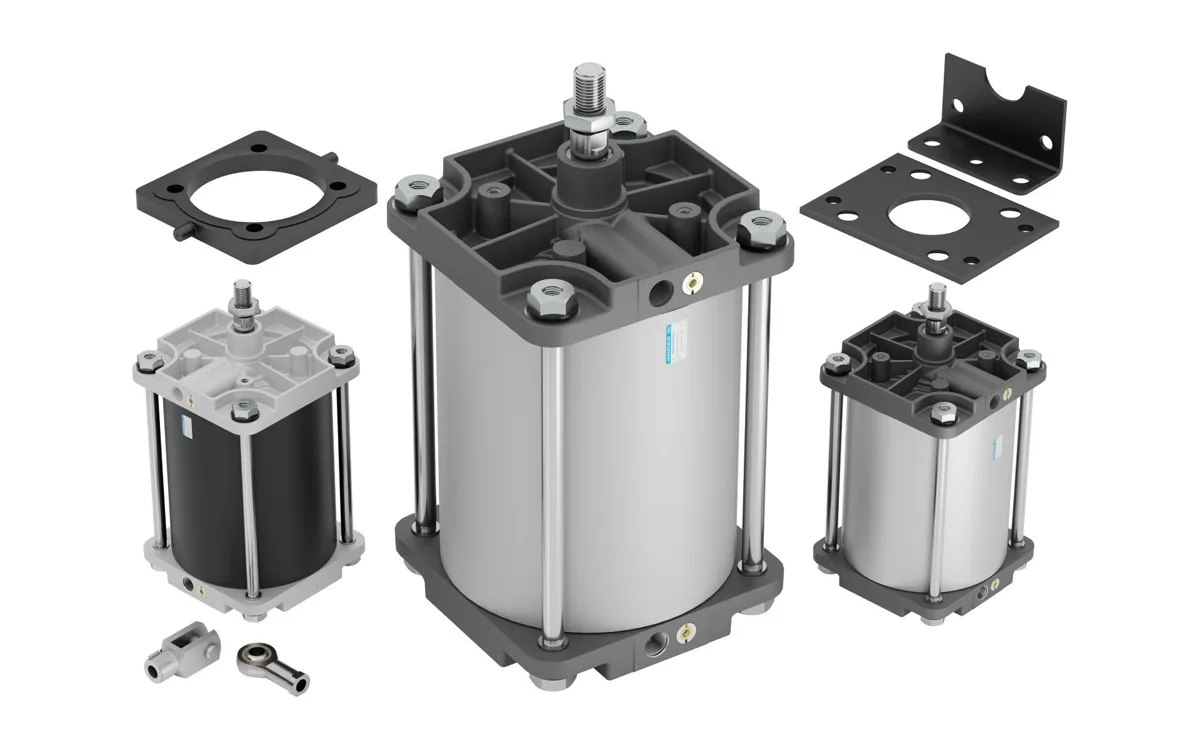
- 12 product groups
- Janatics manufacturer
- Since 2001 in Lucknow
- 4 locations Lucknow, Kanpur, Gorakhpur, Varanasi
Industrial Air Cylinders Range
The Janatics pneumatic cylinders range in 12 product groups. Select a group to see its models and specifications, or request a quotation and we will suggest what suits your machine.
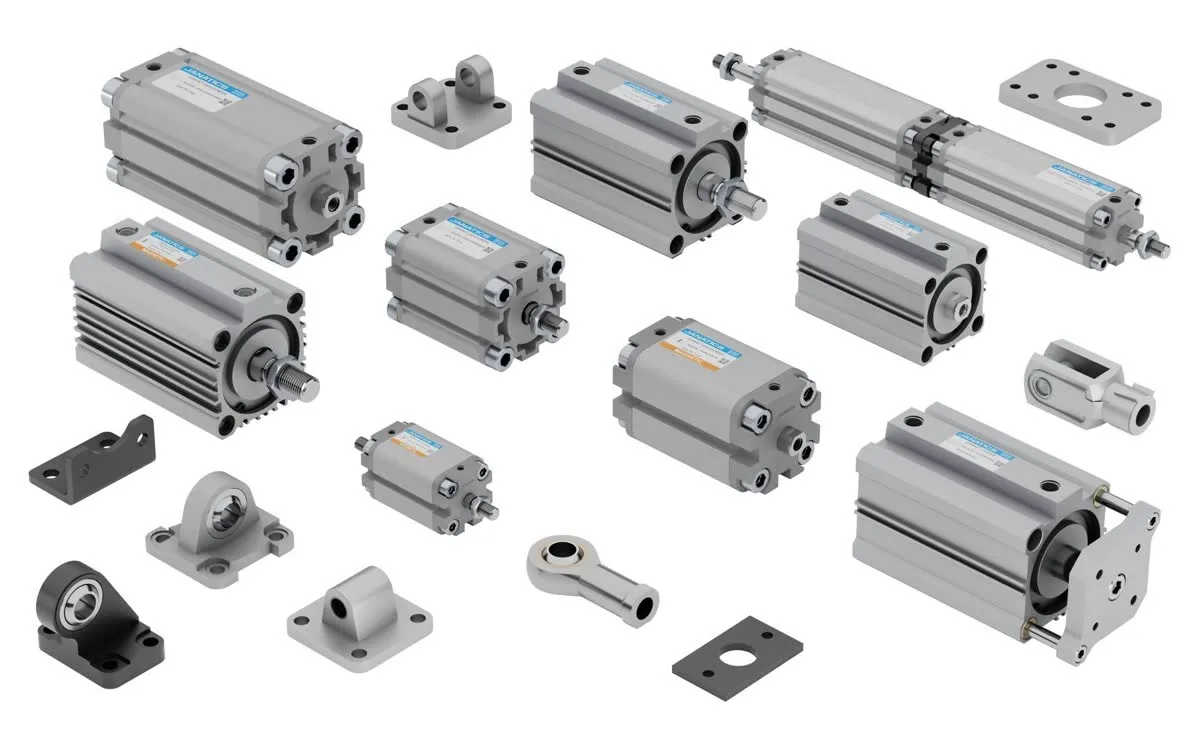
Compact Cylinders
Shorter body than a standard cylinder for motion where space is limited. Aluminium alloy barrel, with ISO 21287 compact versions, magnetic and non-magnetic.
View details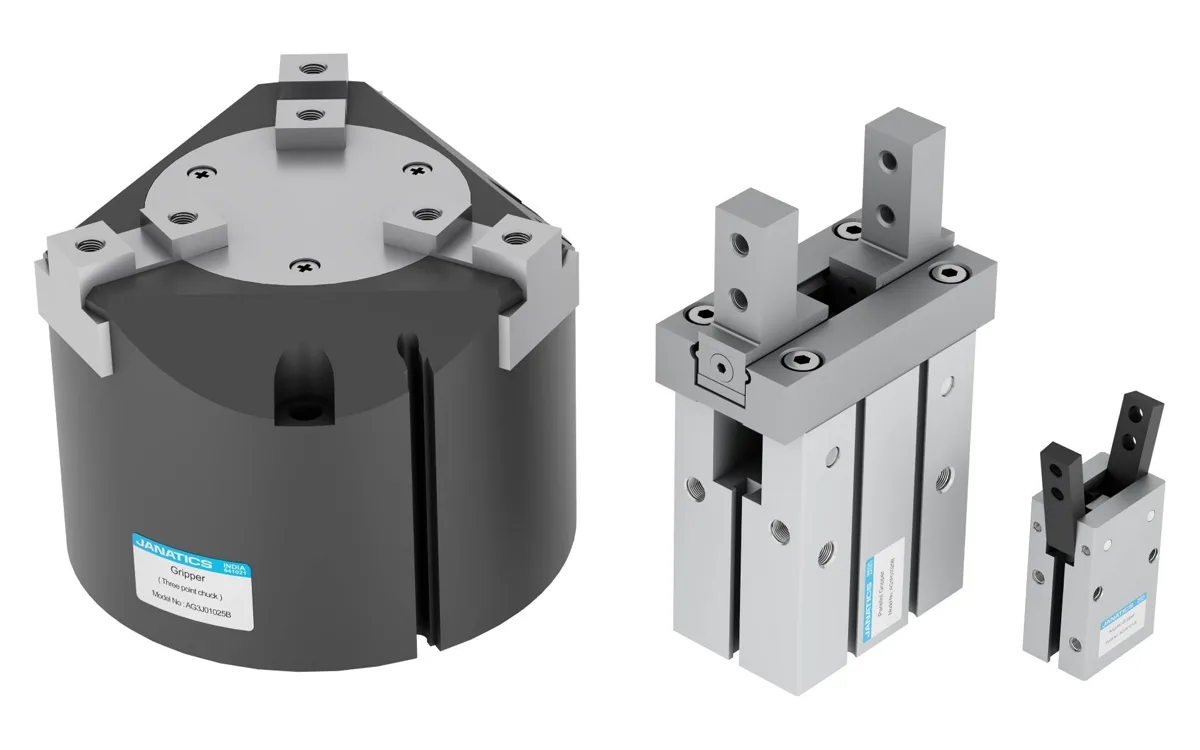
Grippers
Pneumatic grippers whose jaws, also called fingers, are operated by compressed air to hold and release objects.
View detailsHeavy Duty Cylinders
Robust cylinders built for extreme loads, harsh environments and demanding operating conditions.
View details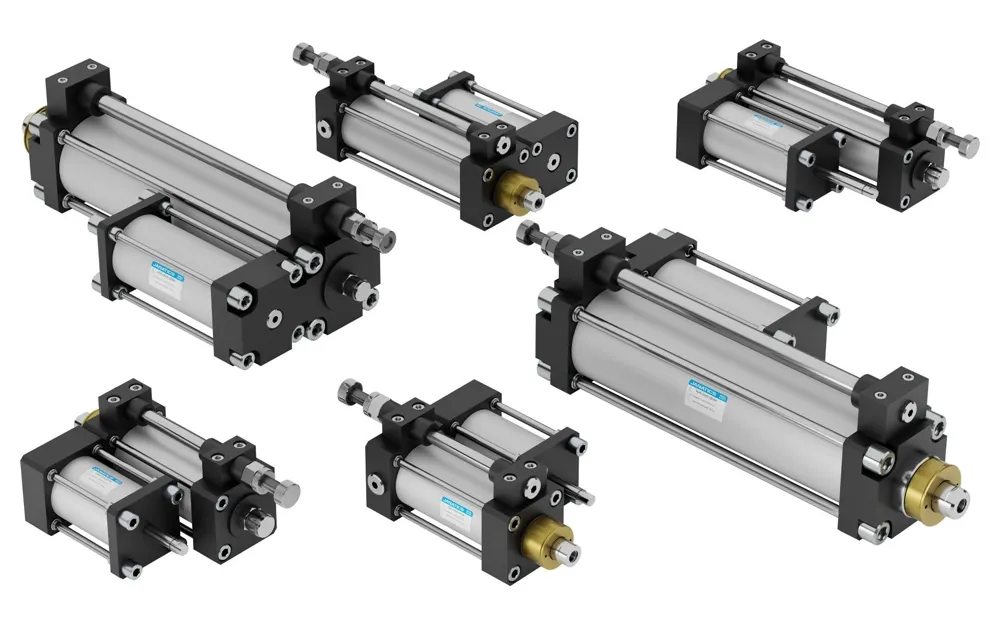
Hydro Check Cylinders
A combination of pneumatics and hydraulics in one cylinder.
View details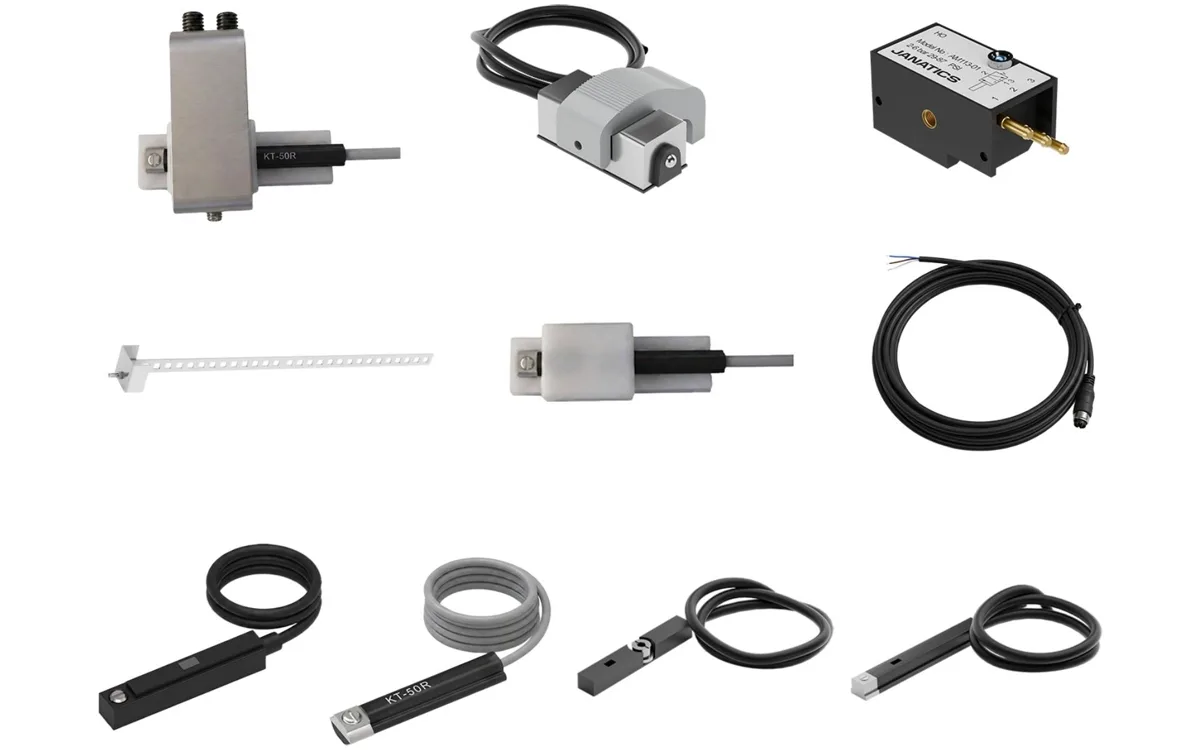
Magnetic Sensors
Electromechanical switches and pneumatic proximity switches that activate the circuit from cylinder position.
View details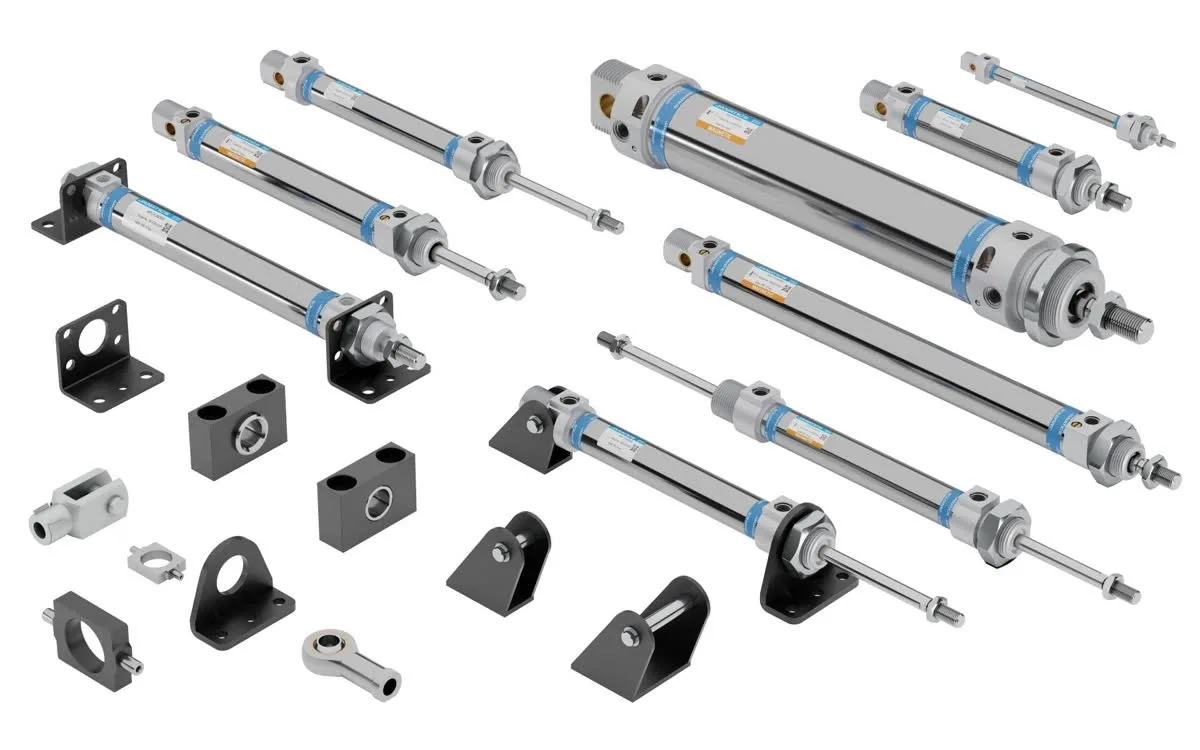
Miniature and Round Cylinders
Round cylinders with a circular outer barrel made of stainless steel, including miniature sizes.
View details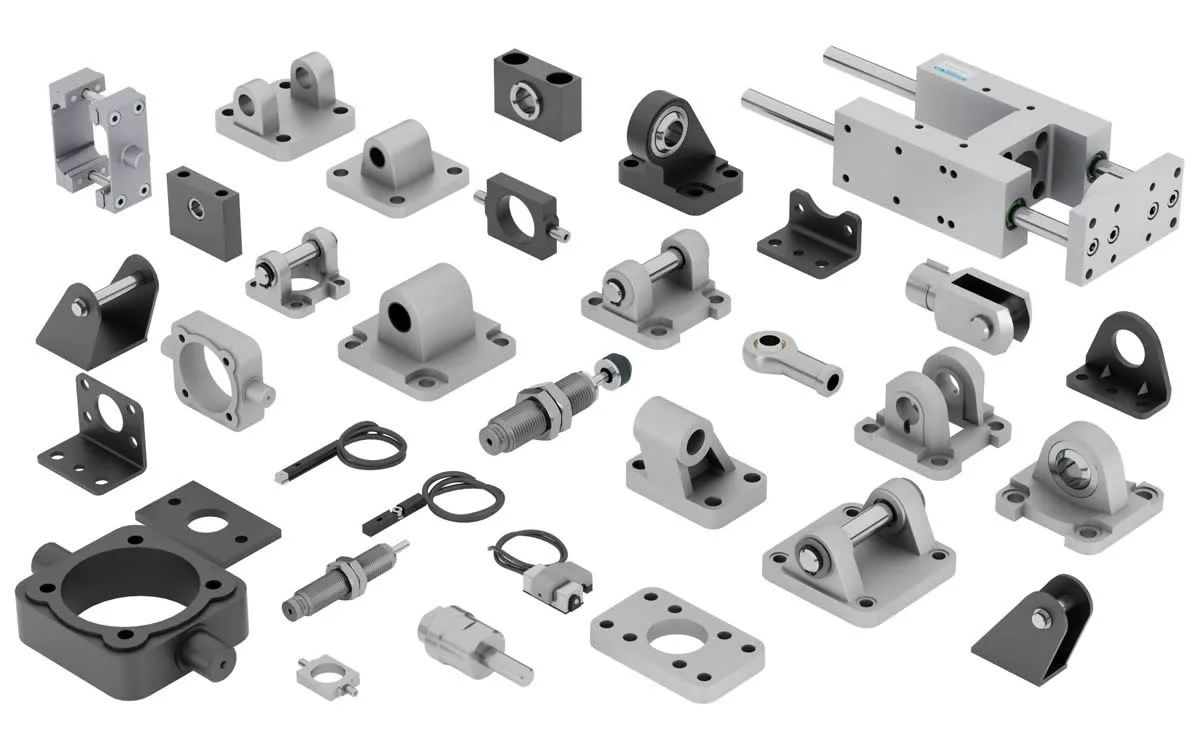
Mountings and Accessories
Mountings and accessories that determine how the cylinder is fixed to the machine.
View details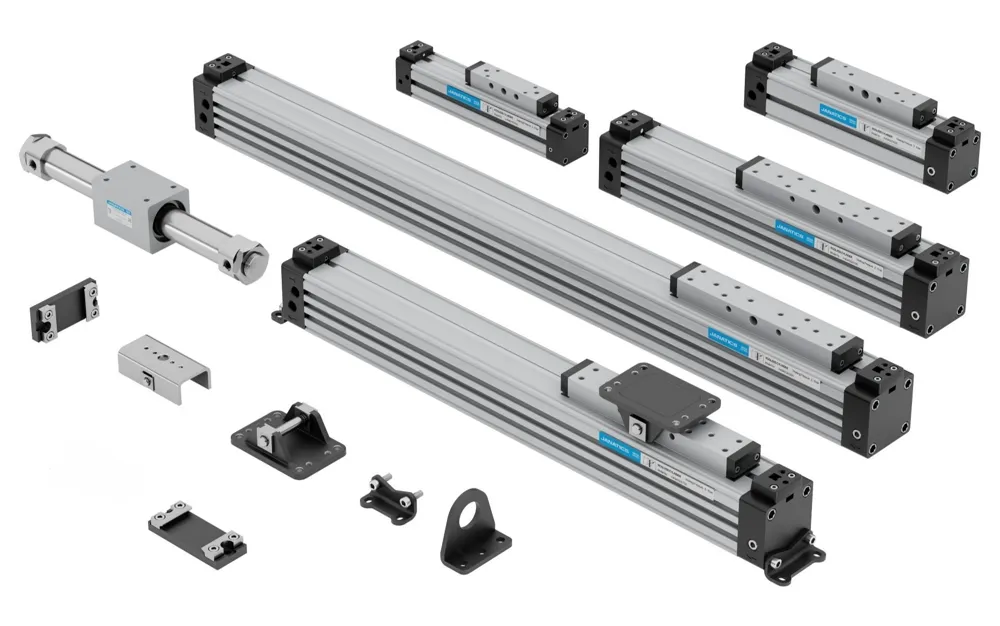
Rodless Cylinders
Mechanically linked and magnetically coupled rodless cylinders for long strokes in minimal space, with adjustable end cushioning.
View details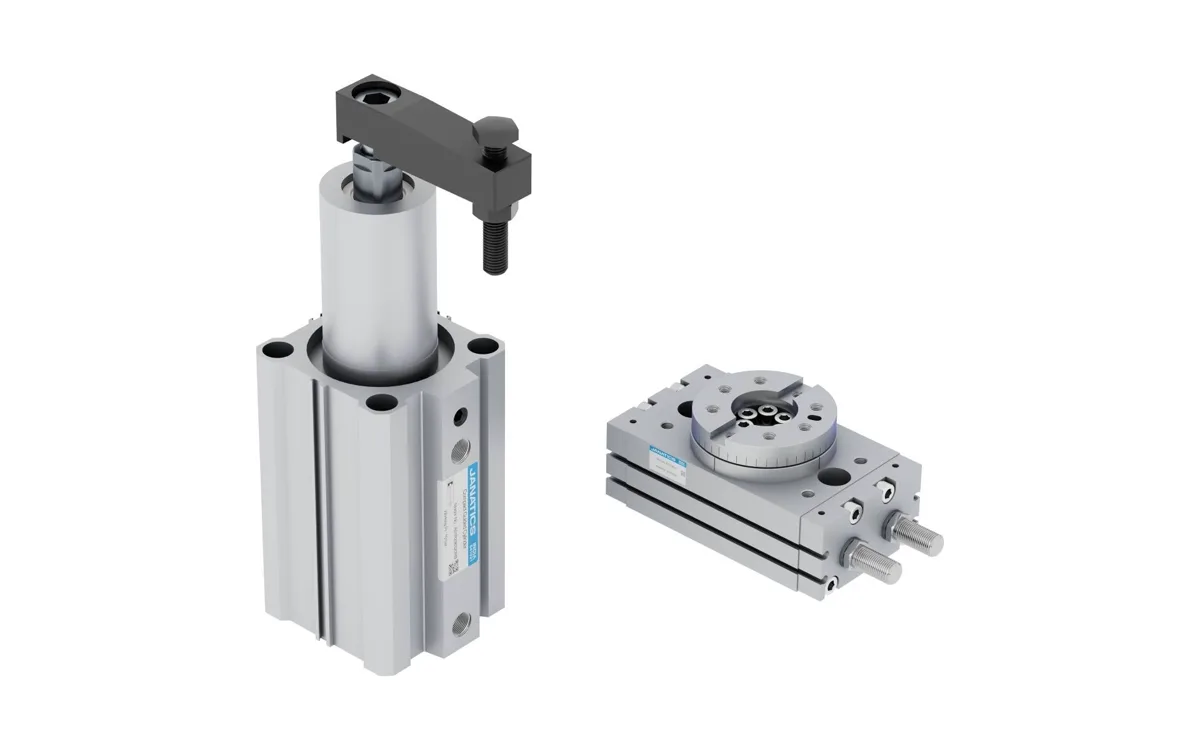
Rotary Cylinders
Actuators that generate rotational motion for clamping devices, rotary tables, machining fixtures and holding devices.
View details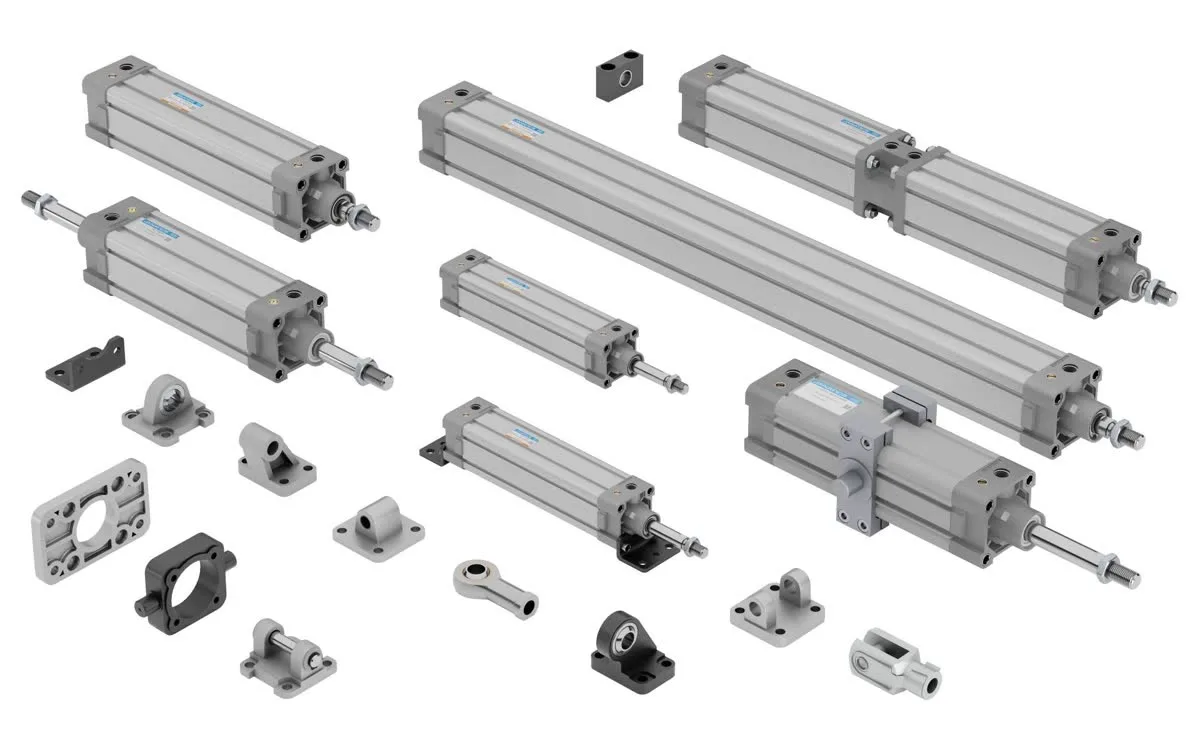
Square Profile Cylinders
Cylinders whose barrel has flat square sides instead of the common round profile.
View details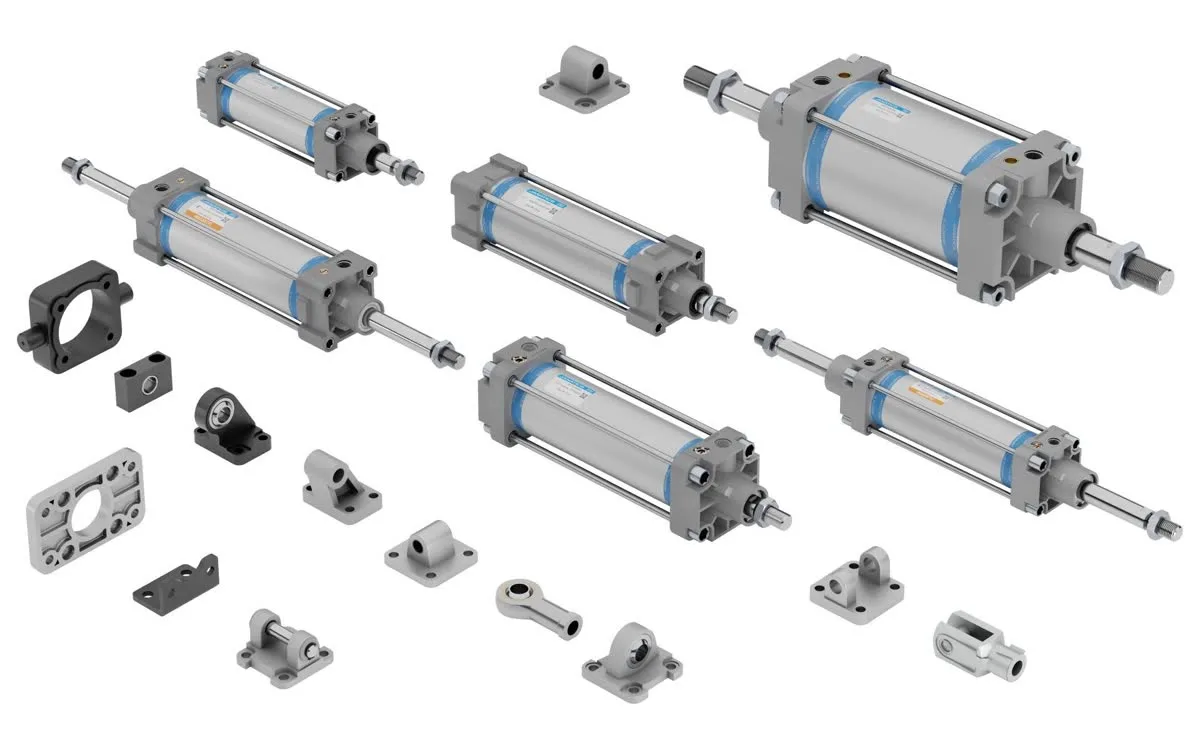
Tie Rod Cylinders
Cylinders that use high-strength tie rods to secure the end caps to the barrel.
View details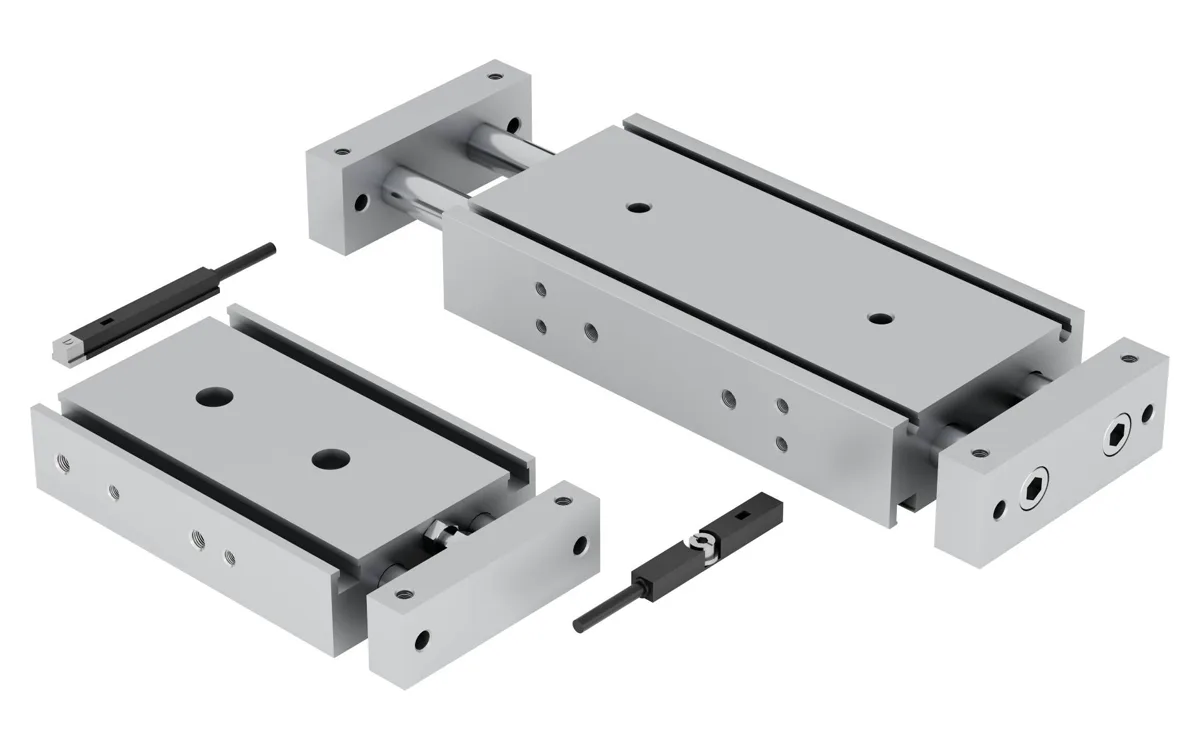
Twin Piston Cylinders
Two pistons and two rods side by side in one wide body with parallel bores.
View detailsWhat Is a Pneumatic Cylinder and Why Is It Important?
A pneumatic cylinder is an actuator that uses compressed air to push and pull a load along a straight line, or to turn it through an angle. A piston moves inside a barrel. Air admitted to one side pushes the piston and rod through the stroke. In a double-acting cylinder, air on the other side returns it, and in a single-acting cylinder a spring does.
Cylinders are the working end of a pneumatic circuit. They give fast, repeatable motion without a motor and gearbox, which is why they are used on assembly lines, packaging machines, clamping fixtures and automation of every kind. The right cylinder depends on the force needed, the stroke, the speed, the space available and the environment, and the wrong one stalls, wears early or slams at the end of its stroke.
Types of Pneumatic Cylinders and Their Uses
- Standard and tie rod cylinders use tie rods to hold the end caps to the barrel, a common general-purpose construction.
- Compact cylinders have a shorter body than a standard cylinder, for motion where space is limited. Janatics lists compact ISO cylinders to ISO 21287, in magnetic and non-magnetic versions.
- Square profile cylinders have a flat-sided square barrel instead of the round profile.
- Heavy duty cylinders are built for extreme loads, harsh environments and demanding operating conditions.
- Rodless cylinders give linear motion without a projecting rod, so they allow long strokes in minimal space and avoid rod buckling. They are mechanically linked or magnetically coupled.
- Rotary cylinders and actuators generate rotational motion, for clamping devices, rotary tables, machining fixtures and holding devices.
- Twin piston, hydro check and miniature and round cylinders cover guided, controlled-speed and small-bore needs, and grippers hold and release objects with air-operated jaws.
How Does a Pneumatic Cylinder Work?
Air pressure on the piston creates force, and a valve decides which side gets the air. The force is pressure times piston area, so a 63 mm bore at 6 bar gives a theoretical force of about 1.87 kN, and the real force is lower after friction. The speed is set by how fast air flows in and out, which flow control valves adjust, and cushioning at the ends slows the piston before it hits the end cap.
A magnetic piston lets a sensor on the barrel report the piston position to the controller. The cylinder is fixed to the machine with mountings such as foot, flange or clevis, chosen from how the load moves.
How to Choose the Right Air Cylinders for Your Application?
Start from what the machine has to do, then match size, function and air supply. These are the factors we ask about before recommending a model:
| Factor | What to establish |
|---|---|
| Force and bore | Work out the force the load needs, then choose a bore that gives it at your working pressure with a margin. Janatics ISO cylinders are listed from 8 to 320 mm bore. |
| Stroke | The travel needed. Very long strokes in a short length point to a rodless cylinder. |
| Speed and cushioning | Speed is set with flow control valves, and cushioning prevents impact at the end of the stroke for heavy loads or high speed. |
| Single or double acting | Single-acting for one-direction work with a spring return, double-acting where force is needed both ways. |
| Mounting | Foot, flange, clevis or trunnion mounting, set by how the load moves. Mountings and accessories are listed for each group. |
| Position sensing | Cylinders with a magnetic piston work with magnetic sensors, which are electromechanical or pneumatic. |
| Environment | Heavy duty cylinders for harsh conditions, and stainless steel barrels in the round cylinder range where corrosion matters. |
| Air supply | Clean, dry air at a regulated pressure of 0 to 10 bar, from an air preparation unit, keeps seals and bores in good condition. |
The models, sizes and ratings are on the page of each product group above. Pneumatic components perform best on clean, dry air, so see our compressed air dryers and filters and drains.
Where Are Air Cylinders Used?
Janatics does not publish a list of industries for these products. The uses below are the ones its product pages state, or follow directly from what each product does. If you have a specific application, tell us and we will confirm suitability before you order.
Robotics, packaging, electronic parts, medical equipment and automotive
Janatics lists these uses for its compact cylinders, where space is limited.
Clean rooms, machine safety systems, automation and robotics
Janatics lists these uses for its twin piston cylinders.
Clamping devices, rotary tables, machining fixtures and object holding
Janatics lists these uses for its rotary cylinders.
Long strokes in a short frame
Rodless cylinders move a load over a long travel with no projecting rod.
Holding and handling parts
Grippers and the three point chuck hold a part from the inside or the outside.
Controlled-speed strokes
Hydro check cylinders give steady, adjustable speed.
Pneumatic Components, Compressed Air and Technical Support
Pneumatic components perform only as well as the compressed air that reaches them. A rotary screw or reciprocating air compressor makes the air, compressed air piping carries it, and the Janatics components use it. The same team supplies both ends of the line, so the air quality and the component ratings are matched. Our team sizes components to your requirement as part of compressed air solutions, and supports them with scheduled servicing and spare parts under AMC services. See also industrial automation.
Air Cylinders Supplier Across Uttar Pradesh
Syndicate Industrial Services works as a supplier of pneumatic cylinders from its head office in Lucknow, and through its branches in Kanpur and Gorakhpur, with a further branch in Varanasi. Beyond these cities we supply pneumatic components to plants across Uttar Pradesh, as our project record and project map show. Service availability depends on operational coverage and project requirements, so send us your location and we will confirm how we can support it.
Why Choose Syndicate Industrial Services for Air Cylinders?
- In business since 2001. Syndicate Industrial Services began operations in Lucknow in 2001 and serves industrial customers across Uttar Pradesh.
- Janatics range. We supply the Janatics range, including these 12 pneumatic cylinders product groups.
- Components and compressed air from one supplier. Compressors, dryers, filters, piping and pneumatic components from Deep Pneumatics, Trident, Quickair and Janatics.
- Selection based on your numbers. We size components to your load, stroke, speed, flow and pressure before recommending a model.
- Branch network. Operations and customer support run through Lucknow (head office), Kanpur, Gorakhpur and Varanasi.
Frequently Asked Questions About Air Cylinders
01What is a pneumatic cylinder?
A pneumatic cylinder is an actuator that uses compressed air to move a load in a straight line or through an angle. A piston inside a barrel is pushed by air, and a rod carries the motion to the machine. It is the working end of most pneumatic automation circuits.
02How does a pneumatic cylinder work?
Compressed air admitted to one side of the piston pushes it along the stroke, moving the rod. In a double-acting cylinder, air on the other side returns it, and in a single-acting cylinder a spring does. A directional control valve decides which side receives air and which exhausts.
03What is the difference between single-acting and double-acting cylinders?
A single-acting cylinder is driven by air in one direction and returned by a spring, so it needs one air connection. A double-acting cylinder is driven by air in both directions, so it needs two connections and gives force on both strokes. Double-acting suits longer strokes and heavier work.
04What is a rodless cylinder?
A rodless cylinder gives linear motion without a projecting piston rod. An internal piston is linked to an external carriage, mechanically or magnetically, that moves the load along the cylinder. It allows long strokes in minimal space and avoids rod buckling and side loading problems.
05How do I calculate the force of a pneumatic cylinder?
Force equals pressure times piston area. A 63 mm bore at 6 bar gives about 1.87 kN of theoretical force on the extend stroke. Real force is lower because of friction and back pressure, so choose a bore with a margin over the load. Send us the load and we will size it.
06What are compact cylinders used for?
Compact cylinders have a shorter body than a standard cylinder, so they give linear motion where space is limited. Janatics lists them for robotics, packaging, electronic parts manufacturing, medical equipment and the automotive industry, with an aluminium alloy barrel.
07Which sensors work with pneumatic cylinders?
Cylinders with a magnetic piston work with magnetic sensors that signal piston position to the circuit. Janatics lists two types: electromechanical switches, and pneumatic proximity switches. Choose by whether the signal goes to an electrical controller or into the pneumatic circuit.
08Where can I find a pneumatic cylinder supplier in Uttar Pradesh?
Syndicate Industrial Services supplies Janatics pneumatic cylinders from its head office in Lucknow, with branches in Kanpur, Gorakhpur and Varanasi. Use the enquiry form on this page or call +91 93350 37579 to confirm availability for your location.
Looking for Industrial Air Cylinders?
Tell us about your machine: the load, stroke and cycle time, the working pressure and the control voltage. We will review it and recommend suitable components with a quotation.