
Reciprocating Air Compressors Supplier, Dealer & Distributor
Syndicate Industrial Services is an authorised Deep Pneumatics dealer, distributor and supplier of industrial reciprocating air compressors in Lucknow, Kanpur, Gorakhpur and other serviceable industrial locations across Uttar Pradesh. Piston compressors are a practical choice for workshops and for air used in bursts, and the range reaches from low pressure to 35 bar, with oil-free models where oil carry-over is not acceptable. We help you choose a machine from your pressure, air flow and running hours, and support it with installation and maintenance services.
- 3 reciprocating ranges
- Up to 35 bar high pressure
- Since 2001 in Lucknow
- 4 locations Lucknow, Kanpur, Gorakhpur, Varanasi
Reciprocating Air Compressor Solutions
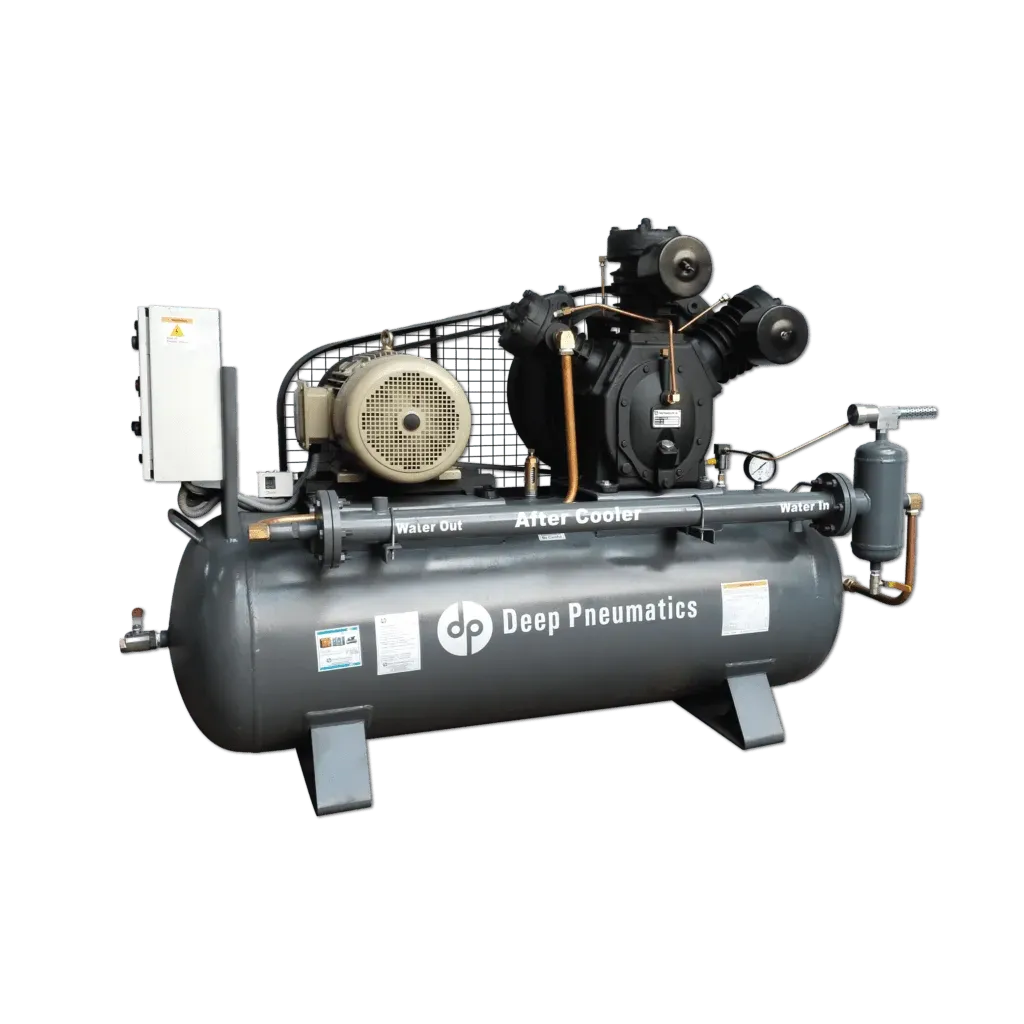
Three Deep Pneumatics reciprocating ranges: lubricated, high pressure and non-lubricated. Select a range to see its models and specifications, or request a quotation and we will suggest the machine that suits your plant.
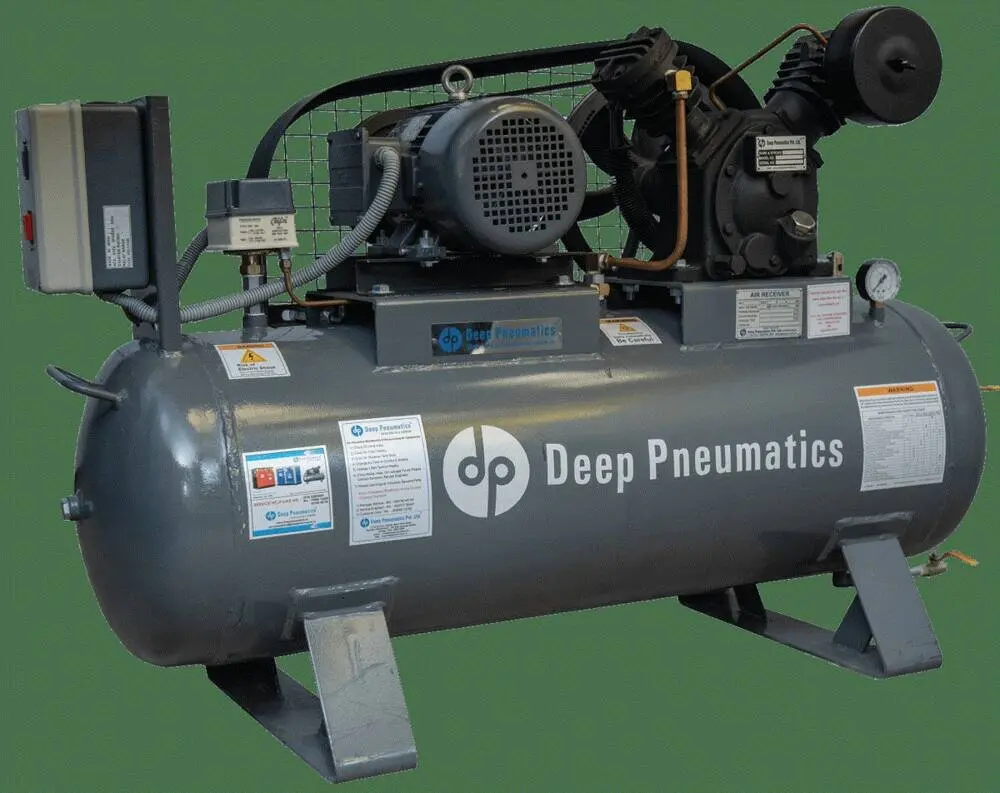
Lubricated Reciprocating Air Compressors
Single-stage (3 to 8 bar) and two-stage (up to 12 bar) piston compressors, 1 to 30 HP and 3 to 80 CFM, for workshops, service stations and general plant air.
View detailsHigh Pressure Lubricated Reciprocating Air Compressors
Multi-stage machines up to 25 to 35 bar (3 to 40 HP, 5 to 110 CFM) and boosters up to 35 bar (10 to 30 HP, 60 to 210 CFM), for PET blowing, laser cutting and pressure testing.
View details
Non-Lubricated Reciprocating Air Compressors
Piston compressors with self-lubricating rings, 1 to 30 HP, 3 to 110 CFM and up to 8 bar, where oil carry-over is not acceptable.
View detailsWhat Is a Reciprocating Air Compressor and How Does It Work?
A reciprocating air compressor compresses air with a piston moving back and forth in a cylinder. The motor turns a crankshaft, which drives the piston. On the intake stroke an inlet valve opens and air is drawn into the cylinder. On the return stroke the piston squeezes that air, the discharge valve opens, and the compressed air flows into a receiver tank.
In a single-stage machine this happens once, which suits lower pressures. In a two-stage or multi-stage machine, the air is compressed in one cylinder, cooled in an intercooler, and compressed again in the next, which lets it reach higher pressure without overheating. A booster skips the first stage: it takes air that another compressor has already compressed and raises it further. In a lubricated machine, oil in the crankcase lubricates the cylinder walls and rings. In a non-lubricated machine, self-lubricating piston rings replace the oil, so no oil enters the compression chamber.
The compressor fills the tank and then rests until the pressure falls, which is why piston machines suit workshops that use air in bursts. Their valves, rings and bearings are accessible and familiar to most maintenance teams. For air drawn continuously for long hours, a rotary screw air compressor is usually better suited.
Types of Reciprocating Air Compressors and Their Applications
The type is set mainly by the pressure needed and by whether oil may reach the air. The ranges on our site compare as follows:
| Type | How it compresses | Published range | Typical use |
|---|---|---|---|
| Single-stage lubricated | Compresses the air once in one cylinder. | 3 to 8 bar; 1 to 20 HP; 3 to 80 CFM | Spray painting, cleaning, air-operated pumps and other low-pressure uses. |
| Two-stage lubricated | Compresses the air in a large cylinder, cools it in an intercooler, then compresses it again in a smaller cylinder. | Up to 12 bar; 2 to 30 HP; 5 to 80 CFM | CNC and fabrication shops, packaging and injection moulding machines, plasma cutting, tyre shops and service stations. |
| Multi-stage high pressure | Compresses the air in several stages with intercooling between them. | Up to 25 to 35 bar; 3 to 40 HP; 5 to 110 CFM | PET blowing, fibre laser cutting, pressure testing and oil and gas duties. |
| Booster | Takes air that an existing compressor has already compressed and raises it to high pressure. | Up to 35 bar; 10 to 30 HP; 60 to 210 CFM | PET blowing and testing where low-pressure plant air is already available. |
| Non-lubricated (oil free) | A piston compressor whose cylinder runs dry, with self-lubricating piston rings in place of oil. | Up to 8 bar; 1 to 30 HP; 3 to 110 CFM | Dairy and food processing, hospitals, pharmaceutical units and laboratories. |
Ranges as published on the product pages for lubricated, high pressure and non-lubricated compressors, which list every model. The lubricated page also lists a single-stage reciprocating vacuum pump, 2 to 10 HP.
How to Choose the Right Reciprocating Air Compressor for Your Industry?
Choose from the pressure, the air flow and the running hours, then decide whether the air must be oil free. These are the factors we ask about before recommending a model:
| Factor | What to establish |
|---|---|
| Working pressure | The highest pressure the tools or process need, in bar, with the pressure lost in piping, dryers and filters added. Pressure decides single-stage, two-stage or multi-stage. 1 bar is about 14.5 psi. |
| Air flow (CFM) | The free air delivered, with all users running together. 1 CFM is about 0.0283 m³/min. Add an allowance for leakage and growth. |
| Duty and running hours | Piston compressors fill a tank and rest, which suits workshops that use air in bursts. Air drawn continuously through the shift points to a screw compressor. |
| Lubricated or oil free | Choose non-lubricated where oil carry-over into the product or process is not acceptable. Otherwise a lubricated machine with suitable filtration is the usual route. |
| Receiver tank size | The tank stores air and smooths demand, so a larger tank lets the compressor run less often. Tank size depends on how the demand varies. |
| Cooling | Air cooled for most duties. High-pressure machines are available air or water cooled. |
| Air treatment | Whether the air must be dried and filtered after the compressor, and to what quality, which sets the dryer and filters. |
| Power supply and space | Motor rating in HP and kW, electrical supply, and floor space and ventilation for the compressor. |
If your demand is steady and long, compare with the rotary screw range, or the oil free screw compressors where air quality is critical. For a longer walk-through, read our guide on choosing the right industrial air compressor.
Where Are Reciprocating Air Compressors Used?
Piston compressors are used where air is needed in bursts, at higher pressures, or in small quantities of oil-free air. The pressure and air quality each application needs differ, which we review before recommending equipment.
CNC and fabrication shops
Clamping, blow-off and hand tools on the shop floor, usually in bursts, which suits a piston compressor. Compressed air for engineering and fabrication.
Packaging and moulding machines
Actuation air for packaging machines and injection moulding machines. Compressed air for the packaging industry.
Tyre shops and service stations
Tyre inflation, impact wrenches and vehicle lifts. Compressed air for the automobile industry.
PET blowing and plastics
High-pressure air for stretch blow moulding of bottles and jars. Compressed air for the plastics industry.
Laser cutting and pressure testing
High-pressure air as an assist gas for fibre laser cutting, and test air for components, vessels and assemblies.
Dairy and food processing
Non-lubricated air where it touches food or its packaging. Compressed air for food and beverage plants.
Hospitals and pharmaceutical units
Oil-free air for medical and dental equipment, and for process and instrument air. Compressed air for healthcare.
Laboratories and education
Clean air for instruments and test rigs. Compressed air for educational institutions.
Air Compressor Installation, Maintenance and Compressed Air Treatment
A compressor is part of a system: receiver, dryer, filters and piping decide the quality of the air at the point of use. We can supply the receiver, a compressed air dryer, filters and drains and distribution piping along with the compressor, so the system works as one. Where a plant also needs pneumatic components or on-site nitrogen or oxygen, the same team supplies them. We support the compressor from selection onward:
- Equipment selection assistance. We work from your tools, pressure and running hours to a specific model, as part of Compressed Air Solutions.
- Installation and commissioning. Installation, commissioning and testing, up to complete turnkey delivery, through Turnkey Projects.
- Preventive maintenance and spares. Scheduled servicing, health checks and spare parts support under AMC Services.
- Standby or temporary capacity. Compressors for short projects, peak loads or standby during servicing through Air Compressor Rental.
Reciprocating Air Compressor Supplier Across Uttar Pradesh
Syndicate Industrial Services works as a reciprocating air compressor supplier from its head office in Lucknow, and as an industrial air compressor dealer through its branches in Kanpur and Gorakhpur, with a further branch in Varanasi. Beyond these cities we deliver industrial air compressor solutions to plants across Uttar Pradesh, as our project record and project map show. Service availability depends on operational coverage and project requirements, so send us your plant location and we will confirm how we can support it.
Why Choose Syndicate Industrial Services for Reciprocating Air Compressors?
- In business since 2001. Syndicate Industrial Services began operations in Lucknow in 2001 and serves industrial customers across Uttar Pradesh.
- Authorised Deep Pneumatics range. The three reciprocating ranges on this page are Deep Pneumatics products, supplied with selection guidance from our team.
- An honest view on piston or screw. We tell you whether a piston machine or a screw compressor fits your demand, and whether an oil-free screw compressor is warranted.
- Compressor with accessories. Receiver, dryer, filters and piping can be supplied together so the system works as one.
- Installation to maintenance under one roof. Installation, commissioning and annual maintenance contracts are offered by the same team.
- Branch network. Operations and customer support run through Lucknow (head office), Kanpur, Gorakhpur and Varanasi.
Frequently Asked Questions About Reciprocating Air Compressors
01What is a reciprocating air compressor?
A reciprocating air compressor uses a piston moving up and down in a cylinder. On the down stroke it draws air in, and on the up stroke it compresses the air and pushes it into a receiver tank. It is also called a piston compressor, and suits workshops and intermittent duty.
02How does a reciprocating air compressor work?
The motor turns a crankshaft, which moves the piston. Air enters through an inlet valve on the intake stroke, is compressed on the return stroke, and leaves through a discharge valve to the tank. In multi-stage machines the air is cooled in an intercooler between stages so the next stage works efficiently.
03What is the difference between single-stage and two-stage compressors?
A single-stage compressor compresses air once and is used for lower pressures. A two-stage compressor compresses it in a large cylinder, cools it, then compresses it again in a smaller cylinder, so it reaches higher pressure, up to 12 bar on our range, and runs cooler.
04What is the difference between lubricated and non-lubricated compressors?
In a lubricated compressor, oil in the crankcase lubricates the cylinder walls and rings. In a non-lubricated one, the piston rings are made of self-lubricating material and the cylinder runs dry, so no oil enters the compression chamber. Choose non-lubricated where oil carry-over is not acceptable.
05What is a booster compressor?
A booster compressor takes air that an existing compressor has already compressed and raises it to a much higher pressure, up to 35 bar on our range. Where low-pressure plant air is available, a booster can be the simpler route to a high-pressure supply, for example for PET blowing or testing.
06Is a reciprocating or a screw compressor better?
A reciprocating compressor suits air used in bursts, as in many workshops. A screw compressor suits air drawn continuously through the shift and is built for long running hours. Tell us your usage pattern and pressure and we will advise which fits, or whether oil-free is needed.
07How do I select a reciprocating air compressor?
Choose the working pressure, the air flow in CFM with all users running, and the hours of running per day. Then decide on lubricated or oil free, the tank size, and whether the air must be dried. Send these to our team and we will recommend a model.
08Which industries use reciprocating air compressors?
Workshops, CNC and fabrication shops, packaging and injection moulding, tyre shops and service stations use lubricated machines. PET blowing and laser cutting use high-pressure ones. Dairy, food, hospital, pharmaceutical and laboratory users choose non-lubricated machines for oil-free air.
09What maintenance does a reciprocating compressor need?
Lubricated machines need regular oil level checks and oil changes, a clean intake filter, condensate drained from the tank, and periodic inspection of valves and belts. Intervals follow the manufacturer's manual. We offer servicing under annual maintenance contracts.
10Where can I find a reciprocating air compressor supplier in Uttar Pradesh?
Syndicate Industrial Services supplies Deep Pneumatics reciprocating air compressors from its head office in Lucknow, with branches in Kanpur, Gorakhpur and Varanasi. Use the enquiry form on this page or call +91 93350 37579 to confirm availability for your location.
Looking for a Reciprocating Air Compressor for Your Workshop or Plant?
Tell us about your requirement: the pressure and air flow you need, how many hours a day it will run, and whether the air must be oil free. We will review it and recommend a suitable Deep Pneumatics compressor with a quotation.