
Compressed Air Filters & Drains Supplier, Dealer & Distributor
Syndicate Industrial Services supplies Trident Pneumatics compressed air filters and condensate drain valves to industrial plants in Lucknow, Kanpur, Gorakhpur and other serviceable industrial locations across Uttar Pradesh. Filters remove particles, water and oil from compressed air, and drain valves remove the condensate that collects in the system, so the air reaching your machines and processes meets the quality the application needs. We help you choose equipment from your air flow, pressure and air-quality requirement, and support it with installation and maintenance services.
- 5 filter and drain ranges
- Since 2001 in Lucknow
- 4 locations Lucknow, Kanpur, Gorakhpur, Varanasi
- Trident Pneumatics range
Industrial Compressed Air Filters & Drain Solutions
Two filter ranges and three condensate drain series from Trident Pneumatics. Select a range to see its models and specifications, or request a quotation and we will suggest what suits your system.
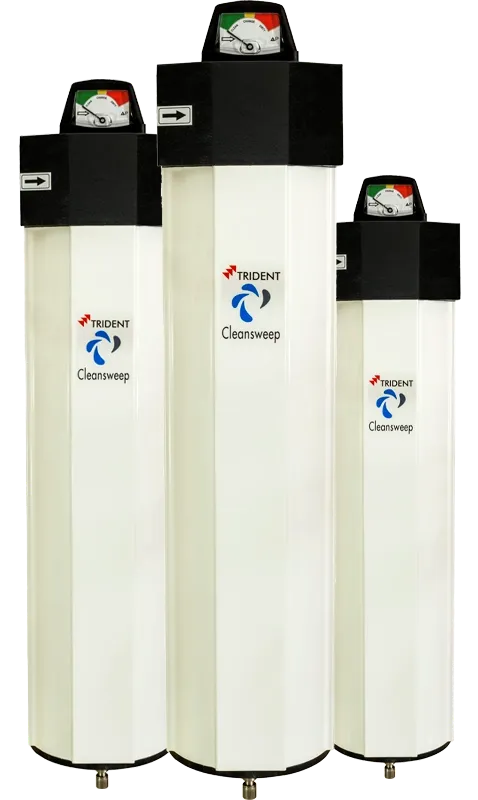
Micro Filters - Cleansweep
Coalescing and particulate filters for compressed air lines, with borosilicate micro glass fibre elements, and an activated carbon element for oil vapour and odour. Flow from 20 to 1810 m³/hour.
View details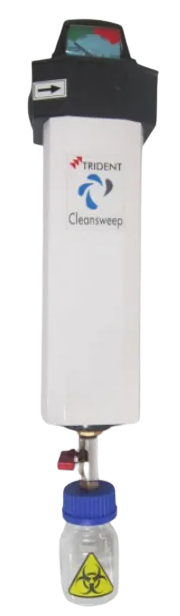
Medical Vacuum Filters
High Performance Series filters for the suction side of medical vacuum pumps, with a borosilicate element and a sterilisable drain flask. 1 to 3 inch connections, 850 to 7504 litres/min.
View details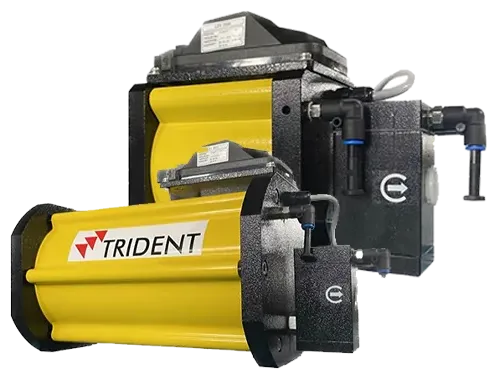
Condensate Sensing Drain Valve - Series LDV
Automatic drain valve that opens on condensate level, so no compressed air is lost. LED function display, test switch, and an automatic switch to timer mode if the sensor fails.
View details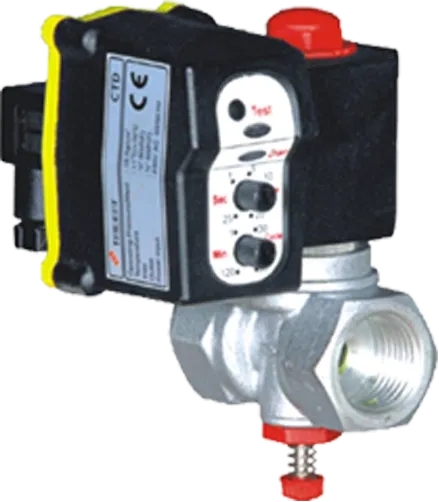
Condensate Sensing Drain Valve - Series CTD
Compact timer-controlled drain valve for dirty condensate, with adjustable drain and cycle times, a manual flush button and a mechanical cleaning pin for the orifice.
View details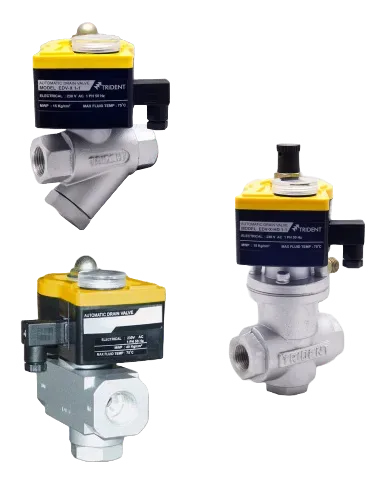
Drain Valve Timer Type - Series EDV-X
Timer-controlled drain valve designed for sludge and rust-laden condensate, with power and drain status indicators. The EDVXSS40 model has an adjustable cycle time of up to 32 hours.
View detailsWhat Are Compressed Air Filters and Why Are They Important?
Compressed air filters remove solid particles, liquid water, oil droplets and, with the right element, oil vapour from compressed air before it reaches machines and processes. They are the last line of defence between the compressor room and the point of use.
Compressed air is never clean as it leaves the compressor. The intake air carries dust and humidity, and compression concentrates both. As the air cools in the aftercooler, receiver and pipes, water vapour condenses into liquid. Rust and scale come off receivers and steel pipes, and an oil-injected compressor leaves traces of oil in the air even after its separator. These contaminants reach pneumatic equipment and production processes together.
The effects are practical: worn cylinders and seals, sticking or blocked valves and orifices, corrosion in tools and pipework, faulty instruments, and spoiled paint finishes, products or packaging. How much filtration is needed depends on the final application. Tools and general actuation tolerate more than instrument air, paint spraying, or air that touches food, medicines or electronics. The purity classes in ISO 8573-1 are a common way to state the requirement for particles, water and oil. Choosing a filter for the quality the application needs, and no more, protects the process without adding avoidable pressure drop.
Understanding Different Types of Industrial Compressed Air Filters
Particulate, coalescing and activated carbon filters do different jobs and are not interchangeable. Each removes a different kind of contaminant.
- Particulate filtration traps solid particles such as dust, dirt and rust in the filter media. It does not remove oil vapour.
- Coalescing filtration captures fine oil and water aerosols on very fine fibres. The droplets merge into larger ones, run down to the bowl and are drained away. A coalescing element also removes particles, and is the stage used to reduce oil and water carryover.
- Fine and submicron filtration uses finer grades to remove particles smaller than one micron (1 µm) and to lower oil carryover further, for applications with a stricter air-quality requirement.
- Activated carbon filtration adsorbs oil in vapour form and odour onto the carbon surface. It does not remove liquid oil, water or dust, so it follows a coalescing stage and protects the carbon from liquid oil.
Our Micro Filters - Cleansweep range follows this approach: coalescing filters with borosilicate micro glass fibre media remove liquid oil and water, and an activated carbon element removes oil vapour and odour. Flow runs from 20 to 1810 m³/hour. The published element grades are:
| Element grade | Filter element | Particle removal | Max. oil carryover |
|---|---|---|---|
| Grade P | Borosilicate | 5 µm | 5 mg/m³ |
| Grade X | Borosilicate | 1 µm | 0.5 mg/m³ |
| Grade Y | Borosilicate | 0.01 µm | 0.01 mg/m³ |
| Grade A | Activated carbon | 0.01 µm | Removes odour |
As published on the Cleansweep product page, which also lists housing sizes, flow rates, working pressure and temperature (80 °C) for each model.
The Medical Vacuum Filters on this page are a different product: they protect the pump and the surroundings on the suction side of a medical vacuum pump, and are not compressed air line filters.
Why Is Condensate Drainage Important in Compressed Air Systems?
Condensate must be drained because water that stays in the system reaches equipment and degrades the air. Condensate forms when warm, humid air from the compressor cools and its water vapour turns to liquid. The water collects at the aftercooler, in air receivers, in filter bowls, in dryers and at low points of the pipework, often mixed with oil, rust and dirt.
If it is not removed, it builds up and can be carried downstream as slugs of water, flood a filter or dryer so it stops working, and corrode receivers and pipes. A drain that is forgotten, or a manual valve left closed, is a common cause of wet air. An automatic condensate drain removes the liquid without anyone attending, so it is a reliability item in the compressed air system. A drain is not a filter: it removes liquid that has already been separated, and it does not clean the air.
Drain types differ in how they decide to open, and we supply both:
| Series | Control | Published discharge | Notes |
|---|---|---|---|
| Series LDV | Condensate level sensing | 50 to 675 litres/hr across six models, at 7 kg/cm² (g) | No compressed air is lost. If the sensor fails, the valve switches to timer mode. |
| Series CTD | Timer | 150 and 475 litres/hr (two models), at 7 bar (g) | Adjustable drain and cycle times, manual flush button and a mechanical cleaning pin. |
| Series EDV-X | Timer | 29 to 400 litres/hr across five models, at 7 kg/cm² (g) | Designed for sludge and rust-laden condensate. EDVXSS40 cycle time adjustable up to 32 hours. |
Values from the product pages for the LDV, CTD and EDV-X series, which list every model.
How Do Compressed Air Filters and Condensate Drains Work?
Each device removes one kind of contaminant at one point in the air line, and the drains remove what the filters and dryers collect. In a typical system the air passes through these stages:
- Compressor, aftercooler and receiver. Most of the liquid water condenses here, and a drain at each low point removes it.
- Pre-filter. A coalescing filter before the dryer removes oil and water droplets and particles, so the dryer is not overloaded.
- Dryer. Refrigeration or desiccant dryers lower the water vapour content of the air.
- After-filter. A particulate or fine filter after the dryer, especially a desiccant dryer, catches dust. An activated carbon stage is added where oil vapour or odour must be removed.
- Drains. Liquid collects in each filter bowl and receiver. A timer drain opens for a set time at set intervals. A level-sensing drain opens when its sensor detects liquid.
The working principle differs by device. A particulate filter works by trapping solids in the media, a coalescing filter by capturing aerosols so they merge and drain, and an activated carbon filter by adsorbing vapour. Our drain data sheets size each valve alongside the air receiver, pre-filter, refrigeration dryer and after-filter capacity it serves, which shows how closely these parts are meant to work together.
How to Choose the Right Compressed Air Filter and Drain for Your Industry?
Choose from the air flow and the contaminant first, then set the filtration grade from the air quality the process needs. These are the factors we ask about before recommending equipment:
| Factor | What to establish |
|---|---|
| Required air flow | The flow the filter or drain sits on, in m³/hr, from the compressor, dryer or receiver it serves. A filter sized below the flow passes air too fast and loses pressure; the product pages list the flow rating of each model. |
| Operating pressure | The working pressure of the line, in bar or kg/cm² (1 kg/cm² is about 0.98 bar). Check it against both the minimum and maximum working pressure of the drain or filter housing. |
| Filtration grade | Match the element to the job: particulate removal, oil and water coalescing, or vapour and odour removal. Grades differ in particle size and oil carryover, so do not treat them as interchangeable. |
| Required air quality | Set by the process and by any standard it must meet, such as ISO 8573-1 purity classes for particles, water and oil. Instrument air, paint spraying and food contact usually ask more than tool air. |
| Contaminant type | Dust and rust, liquid oil and water, or oil vapour. Each needs a different element, and a line often needs more than one stage. |
| Oil and moisture load | Depends on the compressor type, the aftercooler and the dryer upstream. Heavier loads call for a coalescing stage ahead of finer filtration. |
| Pressure drop | Every element adds resistance. A lower initial pressure loss saves energy, and the differential pressure at which an element must be changed is a maintenance trigger. |
| Operating temperature | Air and ambient temperature limit the element and housing. Check the maximum working temperature published for the model. |
| Pipeline configuration | Connection size and type (BSP or NPT), space around the housing for element change, and where the filter sits relative to the dryer and receiver. |
| Condensate volume | How much liquid the point collects, which depends on air flow, humidity and the stage. Choose a drain whose discharge rating covers the amount, in litres/hr at working pressure. |
| Drain operating requirements | Timer drains suit steady, predictable condensate; level-sensing drains open only when liquid is present. Dirty or sludgy condensate needs a drain designed for it. |
| Maintenance requirements | Access, element change intervals set by pressure drop, drain cleaning and who will carry them out. We can support this under an AMC. |
The filtration grade depends on the application and on any air-quality standard it must meet, so we confirm it with you rather than assume it. For the wider system, see compressed air treatment.
Where Are Industrial Compressed Air Filters and Drains Used?
Filters and drains are used wherever compressed air is a utility. The rows below are general compressed-air uses. The applications Trident Pneumatics lists for each filter and drain are on the product pages, and air-quality requirements differ widely between points in the same plant, which we review before recommending equipment.
Automotive manufacturing
Paint shops, assembly tools and robotic cells need air free of water and oil, so finishes are not spoiled and valves do not stick. Compressed air for the automobile industry.
Pharmaceutical manufacturing
Air that reaches products, packaging or cleanrooms is treated to the plant's quality requirement, with filtration and drainage specified with the quality team. Compressed air for pharmaceutical plants.
Food and beverage processing
Conveying, filling and packing air that touches food or packaging is filtered to the plant's food safety requirement. Compressed air for food and beverage plants.
Packaging industries
Fast-cycling filling, sealing and labelling machines need dry, clean air to keep valves and cylinders running. Compressed air for the packaging industry.
Engineering and manufacturing
CNC machines, blasting, coating and hand tools lose life when water, rust or oil reaches them. Compressed air for engineering and fabrication.
Textile industries
Air-jet looms and spinning machines draw large volumes of air all day, and oil or moisture can mark yarn and fabric. Compressed air for textile mills.
Chemical processing
Instrument air and process air must be dry and continuous, and dirty condensate must be drained reliably. Compressed air and nitrogen for chemical plants.
General industrial production
Plastics, paper, steel and other plants use compressed air for actuation, conveying and cleaning. Browse all industries we serve.
Integrated Compressed Air Filtration and Treatment Solutions
Air quality is set by the whole chain: compressor, dryer, filters and drains working together. A rotary screw air compressor makes the air. Compressed air dryers, such as the heatless desiccant and refrigeration types, take out water vapour. Filters take out particles and oil, and drain valves remove the condensate they and the receivers collect. Leave one out, or mismatch them, and the others work harder or fail early.
We supply these parts together, so the filter grade, dryer and compressor are matched to the same air flow and quality requirement. See the full set of dryers and gas generators on the Trident Pneumatics page, our guide to compressed air treatment, and our compressed air solutions. We also support the equipment after supply:
- Equipment selection assistance. We match the filter grade and the drain type to your air flow, pressure and air-quality needs, as part of Compressed Air Solutions.
- Installation and commissioning. Installation, commissioning and testing, up to complete turnkey delivery, through Turnkey Projects.
- Preventive maintenance and spares. Scheduled servicing, health checks and spare parts support under AMC Services.
Compressed Air Filter and Drain Supplier Across Uttar Pradesh
Syndicate Industrial Services works as a compressed air filter supplier from its head office in Lucknow, and as an industrial air filter dealer and drain valve supplier through its branches in Kanpur and Gorakhpur, with a further branch in Varanasi. Beyond these cities we deliver compressed air filtration solutions to plants across Uttar Pradesh, as our project record and project map show. Service availability depends on operational coverage and project requirements, so send us your plant location and we will confirm how we can support it.
Why Choose Syndicate Industrial Services for Compressed Air Filters & Drains?
- In business since 2001. Syndicate Industrial Services began operations in Lucknow in 2001 and serves industrial customers across Uttar Pradesh.
- Trident Pneumatics filters and drains. The five ranges on this page are Trident Pneumatics products, and our team can explain the differences between them.
- One supplier for the whole air system. Compressors, dryers, filters, drains, aluminium piping and pneumatic components from Deep Pneumatics, Trident, Quickair and Janatics.
- Selection based on your numbers. We ask for air flow, pressure, the contaminant and the air quality you need before recommending a filter or drain.
- Installation to maintenance under one roof. Installation, commissioning and annual maintenance contracts are offered by the same team.
- Branch network. Operations and customer support run through Lucknow (head office), Kanpur, Gorakhpur and Varanasi.
Frequently Asked Questions About Compressed Air Filters & Drains
01What is an industrial compressed air filter?
An industrial compressed air filter is a housing with a replaceable element that removes contaminants from a compressed air line. Depending on the element, it removes solid particles, liquid water and oil droplets, or oil vapour and odour. It is installed in the air line, usually after the compressor and around the dryer.
02Why are compressed air filters required in industrial applications?
Compressed air carries dust, rust, water and traces of oil from the intake air, receiver, pipes and compressor. Left in the air, these wear cylinders and valves, block orifices, cause corrosion and can spoil products or finishes. Filters bring the air to the quality the machine or process needs.
03What contaminants can be found in compressed air?
The common ones are dust and dirt drawn in with the intake air, rust and scale from receivers and pipes, liquid water and water vapour, and oil as droplets, aerosol or vapour from the compressor lubricant. Each needs a different treatment: filtration, drying or adsorption.
04What is the difference between particulate and coalescing filters?
A particulate filter traps solid particles such as dust and rust in its media. A coalescing filter captures fine liquid aerosols of oil and water, which merge into larger droplets and drain away, and it also removes particles. Coalescing filters are used where oil and water carryover must be reduced.
05What is a submicron compressed air filter?
A submicron filter removes particles smaller than one micron (1 µm). In our Cleansweep range, Grade X is listed at 1 µm and Grade Y at 0.01 µm particle removal, with lower oil carryover as the grade gets finer. The grade you need depends on the application and its air-quality requirement.
06What is the purpose of an automatic condensate drain valve?
An automatic condensate drain valve removes the liquid that collects in receivers, filters, dryers and low points without anyone opening a manual valve. A timer type opens on a set cycle. A level-sensing type, such as our Series LDV, opens only when condensate is present.
07Why is condensate removal important in compressed air systems?
Water that is not drained builds up in receivers, filter bowls and pipework, then carries rust and oil downstream or floods a filter or dryer. Regular removal protects equipment, keeps the air quality the system was designed for and avoids corrosion in the pipework.
08How do I select the correct compressed air filter?
Start with the air flow and operating pressure of the line, then the contaminant to remove and the air quality the process needs. These decide the filter grade and size. Send your flow in m³/hr, pressure in bar and application to our team and we will suggest a suitable filter.
09How often should compressed air filters be maintained?
There is no single interval. Filter elements should be changed when the pressure drop across them reaches the manufacturer's limit, or at the scheduled interval in the product literature, and drains and bowls should be checked regularly. Our Cleansweep page lists its element-change pressure drop, and our AMC covers servicing.
10Can compressed air filters and dryers work together?
Yes, and they usually do. A coalescing pre-filter ahead of a dryer protects it from liquid oil and water, and an after-filter behind a desiccant dryer catches dust. Drain valves remove the condensate at each stage. Together they set the final compressed air quality.
11Where can I find a compressed air filter supplier in Uttar Pradesh?
Syndicate Industrial Services supplies Trident Pneumatics compressed air filters and condensate drain valves from its head office in Lucknow, with branches in Kanpur, Gorakhpur and Varanasi. Use the enquiry form on this page or call +91 93350 37579 to confirm availability for your location.
Looking for Industrial Compressed Air Filters or Condensate Drain Solutions?
Tell us about your system: the air flow and pressure, what you need to remove from the air, and what your process requires. We will review it and recommend a suitable filter or drain valve with a quotation.