
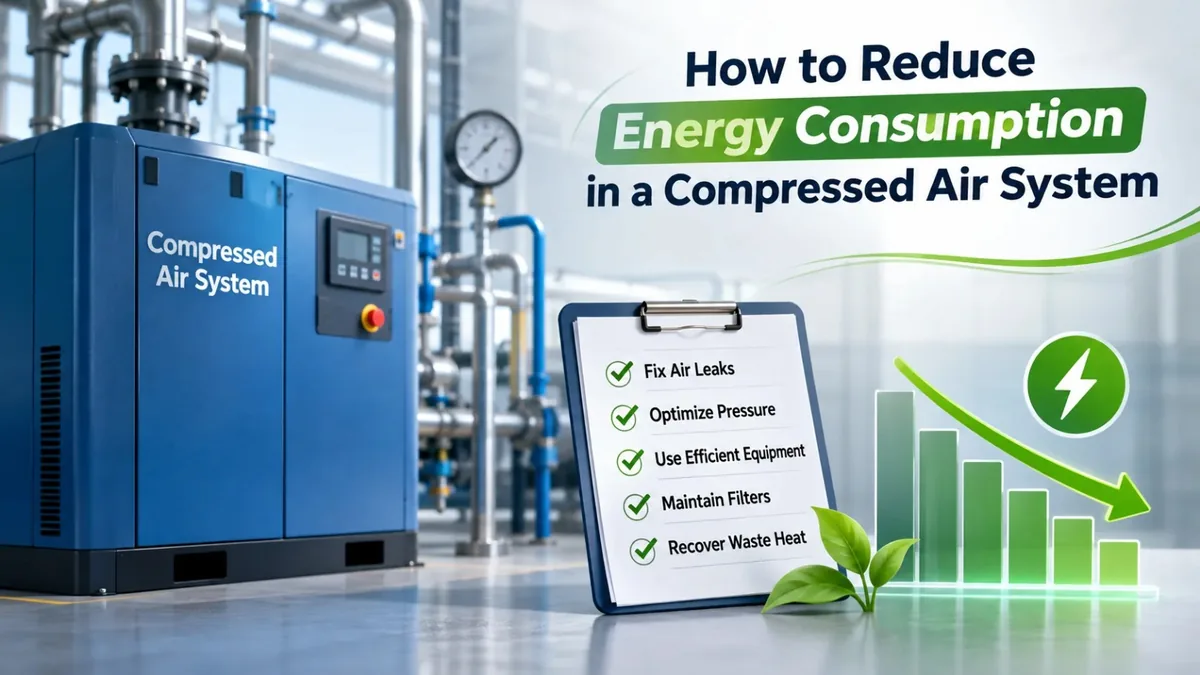
Compressed air is an essential part of many industrial operations, but producing it can also consume a significant amount of electricity .In manufacturing, processing, and assembly plants, compressed air is frequently referred to as the "fourth utility."
From pneumatic actuators to packaging lines, compressed air supports many industrial operations. However, it can also add significantly to a plant's electricity bills. Unnecessary leaks, excessive pressure, inefficient compressor operation and poor maintenance can increase energy consumption over time
The good news is that most facilities can achieve significant compressed air energy savings through simple changes and disciplined maintenance.
Industry reports also suggest that routine actions such as fixing leaks, lowering pressure, and replacing clogged filters can save many plants 10–20% of compressed air energy costs.
In this blog, we will explore practical ways to achieve compressed air energy saving, reduce electricity consumption and keep your compressed air system running efficiently.
- 01 Why Does a Compressed Air System Waste Energy?
- 02 Practical Ways to Reduce Energy Consumption in a Compressed Air System
- 03 How Do Air Leaks Increase Operating Costs?
- 04 How Can Preventive Maintenance Improve System Performance?
- 05 Can Optimizing Operating Pressure Reduce Energy Use?
- 06 Partner with SiS for Sustainable Air Efficiency
1. Why Does a Compressed Air System Waste Energy?
A compressed air system needs electricity to produce air for machines and tools. But sometimes, the system uses more electricity than necessary.
This can happen when air leaks from pipes, the compressor runs at a higher pressure than needed, or the machine keeps running continuously.
For example, air may escape through leaks in pipes or loose connections. The compressor may also use more electricity if it runs at a higher pressure than the machines need. Sometimes, it may keep running even when the factory needs less air.
These problems may seem small, but they can increase electricity bills over time. Finding and fixing them is an important step towards compressed air energy saving.
2. Practical Ways to Reduce Energy Consumption in a Compressed Air System
Here are some effective ways to reduce energy waste and keep your compressed air system running efficiently.
Find and Fix Compressed Air Leaks
Air leaks can waste a lot of energy over time. They commonly occur around pipe joints, hoses, valves, fittings and drain points.
When air escapes, the compressor must produce extra air to maintain the required pressure. This increases the overall electricity consumption and operating costs, especially in factories that run for long hours.
Regular compressed air leak detection helps find and fix these problems before they lead to higher operating costs.
Follow these steps to identify and fix air leaks in your compressed air system:
Step 1: Inspect the system: Check pipes, hoses, valves, fittings and connections for possible leaks or damage.
Step 2: Locate the leaks: Try to listen to the sound for escaping air where it is safe to do so. In noisy factories, use an ultrasonic leak detector to find leaks more easily.
Step 3: Record the leaks: Note down where each leak is and then plan the repairs based on the amount of air being lost.
Step 4: Fix the leaks: Now, tighten the loose fittings and replace damaged parts wherever necessary.
Step 5: Check the repairs: Check the repaired areas again to make sure the leaks have stopped.
Step 6: Repeat inspections regularly: Always check the system periodically to identify new leaks and prevent unnecessary energy waste.
Adjust Compressor Operation as per Actual Air Demand
Not every factory needs the same amount of compressed air throughout the day. Air demand can change depending on production schedules, machine usage and shift timings. If the compressor keeps running at full capacity 24x7 then it may waste electricity.
To improve compressed air energy efficiency, make sure the compressor's output matches the actual air demand.
Here are a few ways to do this:
- Choose the right compressor size: Select a compressor based on the plant's actual air demand and peak requirements.
- Adjust compressor speed: A variable-speed drive (VSD) helps the compressor increase or decrease its output as air demand changes.
- Coordinate multiple compressors: Use a control system to manage compressor operations such as starts and stops.
- Use air storage: An air receiver stores compressed air and supplies extra air when demand suddenly increases.
Ultimately, review your plant's air demand before choosing a solution. The best choice depends on your plant's air usage and operating conditions.
Stop Wasting Compressed Air on Unnecessary Applications
Sometimes, saving energy starts with using less compressed air. Although it is essential for many factory operations, it is not always the best choice for every task.
For example, leaving air pipes continuously on for cleaning or cooling can use more air and this can eventually lead to higher energy consumption.
In fact, you can use an electric blower or industrial vacuum cleaner for performing cleaning tasks. And, for tasks that require compressed air, use efficient nozzles and automatic shut-off controls.
Turning off the air supply during long breaks or when it is not needed can reduce waste and improve compressed air energy efficiency. Also, industries can adopt automatic shut-off valves to stop the air supply when it is not required, helping to prevent the unnecessary energy use.
Keep Your Air Treatment Equipment in Good Condition
Compressed air needs to be clean and dry before it reaches your machines. However, if these components are dirty, poorly maintained or incorrectly sized, they can restrict airflow and increase energy use.
Here are three areas to focus on:
- Clean and maintain filters: Dirty filters can restrict airflow and cause pressure drops. Check them regularly and replace filter elements as recommended by the manufacturer.
- Maintain air dryers: Choose a dryer that meets your plant's air quality requirements. Keep it properly maintained to prevent moisture problems and avoid unnecessary energy use.
- Inspect the piping system: Undersized pipes with too many bends and restrictive fittings can reduce airflow. Fixing these issues helps air reach equipment at the required pressure.
Thus, keeping these components in good condition always helps to reduce pressure losses and improve overall compressed air energy efficiency.
By addressing these common issues, you can improve system efficiency, reduce electricity costs and keep your compressed air system running reliably.
3. How Do Air Leaks Increase Operating Costs?
Air leaks are one of the most common reasons in the compressed air systems for high operating costs. These issues often occur around pipe joints, valves, hoses and loose connections, letting the air escape before it reaches the machine.
When the air leaks, the compressor has to produce more air to maintain the required pressure. As a result it has to use more electricity and eventually raises your operational bills. Many operational managers believe that if the pressure drops then increasing the compressor pressure is the easy solution, but unfortunately this eventually leads to higher energy consumption.
However, one can avoid this issue by checking the systems regularly. Compressed air leak detection helps to identify where air is escaping so the necessary repairs can be made on time. And, fixing these leaks can reduce the overall electricity costs and help maintain the required air pressure.
4. How Can Preventive Maintenance Improve System Performance?
Regular maintenance helps your compressed air system run efficiently and reduces the risk of unexpected breakdowns. When components are dirty, worn out or not working properly, the compressor may use more electricity to deliver the required air pressure.
A preventive maintenance routine helps identify these issues early, reduce energy waste and keep production running smoothly.
Here are some important maintenance tasks:
- Inspect for air leaks: Check pipes, hoses, fittings, valves and drain points regularly.
- Maintain filters: Clean or replace filters as recommended to prevent airflow restrictions.
- Check compressor settings: Ensure pressure and control settings match your plant's air demand.
- Inspect mechanical components: Check lubricants, belts, couplings and motors for signs of wear.
- Check condensate drains: Ensure drains remove moisture properly without wasting compressed air.
- Monitor air dryers: Check dryer performance and operating temperatures to maintain the required air quality.
Regular preventive maintenance helps to reduce energy waste, avoid unexpected downtime and improves the overall compressed air system efficiency.
5. Can Optimizing Operating Pressure Reduce Energy Use?
Yes. Running a compressor at a higher pressure can increase the electricity consumption. In many factories, the pressure is often set higher than required because some machines are not getting enough air due to leaks, blocked filters or narrow pipes.
But, reducing the pressure to the required level can help lower energy use. As a general rule, reducing compressor pressure by 2 psi can save around 1% in energy consumption. Lower pressure can also reduce the amount of air lost through those leaks.
However, pressure should not be reduced without checking the system first. Start by finding out how much pressure your machines actually need to work properly. Then check for pressure losses across pipes, filters, dryers, hoses and valves. Fixing these issues can help deliver air at the required pressure without making the compressor struggle to work harder than necessary.
Overall, the goal is to maintain enough pressure for smooth production while avoiding unnecessary energy use.
6. Partner with SiS for Sustainable Air Efficiency
Reducing energy consumption in a compressed air system is one of the fastest and safest ways to lower operating expenses, minimize the plant's carbon footprint, and boost the overall equipment reliability.
But it also doesn’t mean to always purchase a new compressor. By addressing leaks, optimising pressure, maintaining equipment, and conducting regular system assessments, businesses can significantly improve compressed air energy efficiency while lowering operating expenses.
At SiS, we help industries unlock greater efficiency from their compressed air systems through our advanced solutions, technical expertise, and system-focused engineering support. Whether you need assistance with compressed air leak detection, air pressure optimisation, compressor performance evaluation, or a complete system audit, our team can help you identify opportunities for significant energy savings.
Contact the experts at SiS today to schedule a professional audit, book a compressed air audit and get a clear savings roadmap for your facility.